Insights · Materials
Laminate vs Veneer: How to Choose for Office and Home Furniture
Laminate and veneer sit next to each other in almost every finish selection, and in a small sample they can look like variations on the same idea. In use they are not. One is a printed, manufactured surface built for consistency and resistance. The other is real wood, thin enough to be applied as a surface, and it behaves like wood — including the parts of that which are inconvenient.
Most disappointment with either material comes from choosing it for how it looked on a sample board rather than for what the component actually has to do. What follows is a plain comparison to make that decision deliberately. It is general material guidance; the specification for any particular project is confirmed against that project’s requirements.
What laminate and veneer actually are
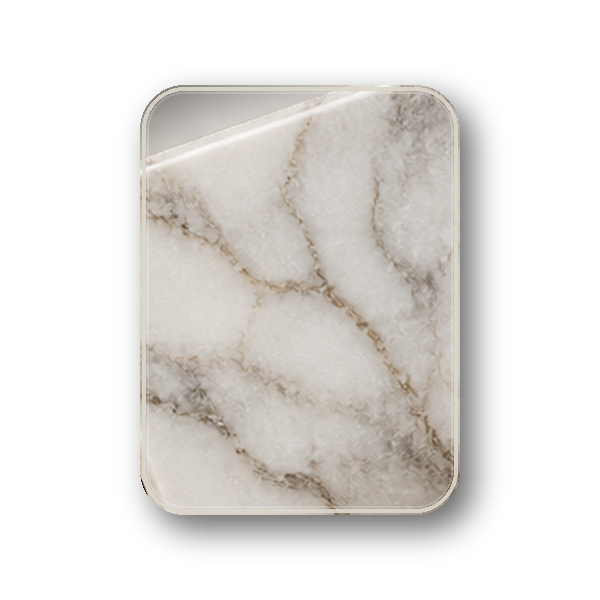
Laminate is a manufactured sheet. Layers of paper are impregnated with resin, pressed under heat and pressure, and topped with a printed decorative layer and a clear wear layer. The pattern you see is printed, which is why a laminate can convincingly resemble walnut, concrete, linen or marble, and why a given shade can be reordered and matched later. The wear layer is the point: it is designed to take abrasion, cleaning and daily contact.
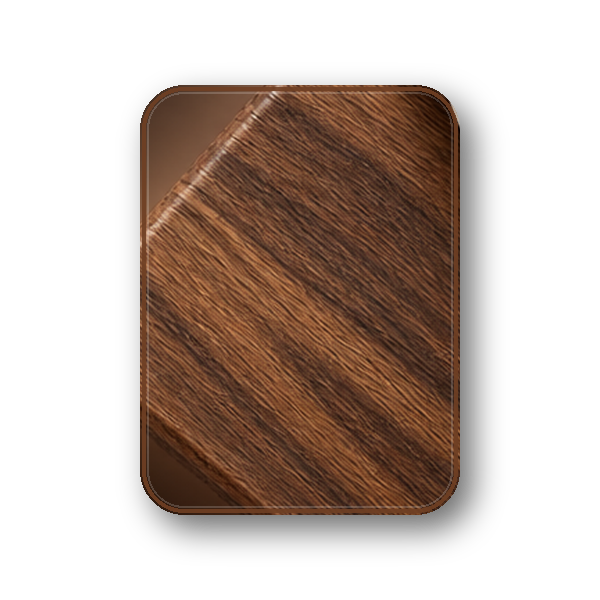
Veneer is a thin slice of real timber, bonded to a panel substrate and then finished with a lacquer, polish or oil. There is no printed layer. The grain is the actual grain of the log it was cut from, which means it carries natural variation — and that the same species from two different batches will not match exactly.
That single difference, printed surface versus natural material, explains almost everything else below.
Appearance: consistent pattern vs natural grain
Laminate gives you predictability. What is on the sample is what arrives, across every panel, in every batch. For a workplace running the same desk finish across sixty workstations, or a kitchen where twenty shutters must read as one surface, that consistency is the entire value. The limitation is repetition: decorative papers repeat on a cycle, and on a large uninterrupted run a sharp eye can pick up the repeat.
Veneer gives you depth that printing does not reproduce — the way light moves differently across grain at different angles, the slight variation from leaf to leaf. It also demands decisions laminate does not. Veneer is laid up in a pattern, and the choice matters:
- Book-matched — alternate leaves flipped, producing a mirrored, symmetrical figure.
- Slip-matched — leaves laid in sequence without flipping, giving a more repetitive, even run.
- Random-matched — deliberate variation, read as more informal.
On a large feature surface, such as a boardroom table or a cabin wall, the lay-up decision changes the result more than the species does. It is worth agreeing at drawing stage rather than leaving it to chance.
Durability and everyday wear
For surfaces that get touched, wiped and knocked all day, laminate is generally the more forgiving choice. Its wear layer is engineered for exactly that, which is why it is so common on worktops, workstation tops, storage shutters and anywhere with high contact.
Veneer’s durability depends almost entirely on the finish applied over it, not on the timber. A well-applied lacquer can perform well for years. But the veneer itself is thin, and once a scratch goes through the finish into the wood, it is visible in a way a laminate scratch usually is not. Veneer is better suited to surfaces that are seen more than they are used — vertical panels, cabin fronts, feature walls — and less suited to a hot-desk surface or a kitchen counter.
Neither material is waterproof, and neither should be treated as such. Both are bonded to a panel core, and standing water will eventually reach that core through an edge or a joint regardless of what is on the face. The choice of core material matters as much here as the surface does.
Maintenance and repairability
Day-to-day, laminate asks for very little: a damp cloth and a mild cleaner. Abrasive pads and strong solvents will dull the wear layer, so they are worth avoiding. Veneer asks for slightly more care, and tends to prefer a dry or barely damp cloth, with cleaning products chosen to suit the finish rather than whatever is under the sink.
Repairability is where they genuinely diverge, and it runs in the opposite direction to durability:
- Laminate resists damage well but repairs badly. A chip or a delaminated edge usually cannot be made invisible; the practical fix is replacing the panel.
- Veneer damages more easily but repairs far better. A polisher can often sand back, touch in and re-finish a scratched veneer surface so the repair is difficult to find.
For a long-life executive cabin, that repairability can be the deciding argument for veneer. For a floor of workstations where nobody is going to commission a French polisher, it is irrelevant, and laminate’s resistance wins.
Where each works well
These are the patterns that tend to hold across projects. They are starting points for a conversation, not defaults.
Kitchens. Laminate is the common choice for shutters and for surfaces near the sink and hob, because of cleaning frequency and moisture exposure. Veneer appears more often on a dining-side island face or a tall unit away from the wet zone, where it reads as furniture rather than as cabinetry. Our modular kitchen page covers how finish choice sits alongside layout and storage decisions.
Wardrobes. Internals are almost always a hard-wearing, light-reflective laminate, because they are handled constantly and need to stay legible. Shutters are the place where veneer earns its cost, particularly on a full-height run in a main bedroom. The wardrobes page deals with the shutter and internal planning side of this.
Executive furniture. This is veneer’s strongest case. A cabin desk and its storage are high-visibility, lower-contact, long-life, and usually a deliberate statement — the three arguments for veneer all point the same way. See executive furniture for how the desk and storage are planned around cabin use.
Workstations. Laminate, in almost every case. High contact, high quantity, long service life, and a need for every unit to match the next one years after the first batch. Matching a replaced panel in three years’ time is straightforward in laminate and difficult in veneer.
Where a project wants both, the usual approach is to put veneer where it is seen and laminate where it is worked on — covered in the questions below.
Relative cost positioning
No prices here; rates move, and a number published today would mislead someone reading next year. What is stable is the relative positioning and the variables behind it.
As a broad rule, veneer sits above laminate on cost, and the gap comes from three places rather than from the material alone:
- The material itself. Veneer is priced by species and by figure. A common species in a plain cut and a rare species in a figured cut are not in the same bracket at all.
- The labour. Veneer is laid up, pressed, sanded and finished. Laminate is bonded and edged. The veneer process carries more skilled hours, and that is usually the larger part of the difference.
- The finishing. Veneer needs a finish applied over it, and the specification of that finish — matt, satin, gloss, number of coats — moves the cost meaningfully.
Within laminate there is also a wide range. Thickness, surface texture, whether the decor is a premium or standard range, and whether it is a specialist product all change the figure. A high-end laminate can cost more than a modest veneer, so “laminate is the cheap option” is too blunt to plan with.
The variable most often missed is quantity. Veneer on one cabin desk and veneer across forty workstations are different propositions commercially and practically, and the second rarely survives a close look at the brief. Where a bulk furniture package is involved, customised furniture planning is the place that trade-off gets resolved.
How substrate and edge treatment affect the result
Both materials are surfaces. They are only as good as the panel they sit on and the way their edges are closed, and this is where visibly similar pieces diverge over a few years.
The substrate decides flatness, screw holding, weight and how the component responds to moisture. A laminate on an inappropriate core in a wet area will fail at the core while the surface still looks fine. Matching core to application is a separate decision, covered in plywood, MDF, HDF and particleboard.
The edge is where most furniture shows its age first. Edges take the knocks, and an open or poorly bonded edge is the easiest route for moisture into the core. Common treatments include a matching edge band, a contrasting band used deliberately, a post-formed edge where the surface wraps the profile, and on veneer a solid lipping that can be shaped and re-finished. On veneer in particular, a solid lipping is often worth the cost purely because it can be repaired, where a damaged veneered edge usually cannot.
Thickness matters too. A thin band is cheaper and more vulnerable; a thicker band survives trolleys, chairs and cleaning equipment far better. On any high-traffic component that is a reasonable place to spend. The materials and finishes page sets out how these details are confirmed for a project.
Choosing between them, briefly
Three questions usually settle it. How much contact will the surface take? Does every unit need to match the others, now and in future? And if it is damaged, will anyone repair it or simply replace it? High contact, high matching, replace-not-repair points to laminate. Low contact, feature surface, long life and worth repairing points to veneer.
Material behaviour described here is general industry guidance. Specific brands, grades, thicknesses, performance ratings and certifications are confirmed against the specification agreed for each project rather than stated in advance.
Common questions
Laminate and veneer — frequently asked
Can laminate and veneer be combined in one project?
Yes, and it is a common approach. The usual logic is veneer on surfaces that are seen and laminate on surfaces that are worked on — veneer shutters with laminate internals, or a veneered cabin desk in an office whose workstations are laminate. Combining them works best when it follows a rule someone can explain, rather than varying piece by piece. Tone and sheen need coordinating so the two read as one scheme.
Which is easier to maintain?
Laminate, for routine cleaning — it tolerates a damp cloth and mild cleaner without much thought. Veneer needs more care in cleaning but is considerably easier to repair, because a scratched veneer surface can often be sanded back and re-finished while damaged laminate generally means replacing the panel. Which one is easier depends on whether you expect to clean it or to fix it.
Is veneer always more expensive?
Usually, but not always. A premium textured laminate can exceed a plain, common-species veneer. The cost difference comes mostly from skilled labour and finishing rather than the material itself, so it widens with figured or rare species and narrows with plain ones. Quantity matters as much as unit rate: veneer across a large repeated furniture package rarely stands up commercially.
Does the edge really change how long furniture lasts?
More than most people expect. Edges take the impacts and are the easiest path for moisture into the panel core, so edge treatment and thickness are often the difference between furniture that ages well and furniture that looks tired in two years — even when the face material is identical.
Next step
Discuss a finish specification for your project
Finish decisions are easier against a real space, a real use pattern and a real scope. Share the requirement and we can work through the options that suit it.
Related reading: Plywood, MDF, HDF and Particleboard